Table of contents
- Characteristics of the Breed
- Origins and breed history
- What does the Bull Terrier look like?
- What is the Bull Terrier’s temperament?
- Is the Bull Terrier suited to your lifestyle?
- How should you train a Bull Terrier?
- What diet is best for a Bull Terrier?
- What health issues affect the Bull Terrier?
- How do you care for a Bull Terrier daily?
- What activities are ideal for a Bull Terrier?
- Who is the Bull Terrier best suited for?
- Frequently asked questions
Characteristics of the Breed
| Bull Terrier: Characteristics | ||
|---|---|---|
| Origin | United Kingdom | |
| Size | Medium | |
| Coat type | Short | |
| Average lifespan | 10–14 years | |
| Hypoallergenic | No | |
| Bull Terrier: Measurements | ||
| Female | Male | |
| Weight | 22–30 kg | 24–32 kg |
| Height | 45–48 cm | 45–56 cm |
Origins and breed history
The Bull Terrier originated in England, where it was developed in the 19th century from crosses between terriers and bulldog-type dogs. Initially bred for activities that no longer exist today, it was later redirected toward a companion role. Its appearance and temperament were refined to create a more balanced and sociable dog. Recognized for its unique look, the Bull Terrier has become popular in many countries as a family companion.
What does the Bull Terrier look like?
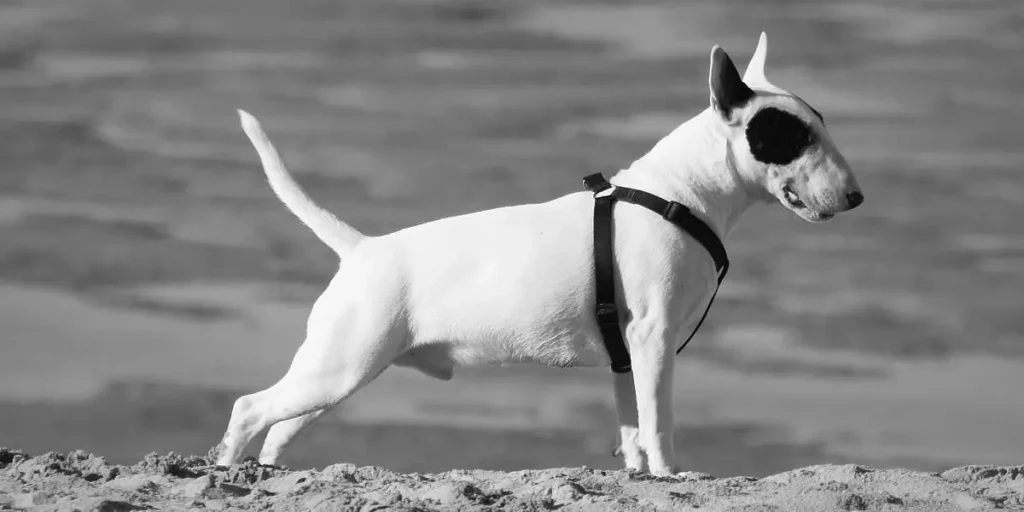
The Bull Terrier is a medium-sized, muscular, and compact dog. It typically stands between 45 and 55 cm at the shoulder and weighs between 22 and 38 kg. Its most distinctive feature is its egg-shaped head, with a convex profile and small triangular eyes. The coat is short, smooth, and glossy. Colors can be white or colored. Average life expectancy ranges from 11 to 14 years.
What is the Bull Terrier’s temperament?
The Bull Terrier has a lively, playful temperament and is deeply attached to its family. Affectionate and expressive, it strongly enjoys human companionship and seeks attention. Intelligent but sometimes stubborn, it can show independence. When well socialized, it is generally friendly with children and other pets. Its energy and enthusiasm require clear boundaries. This breed is known for its clownish personality and strong bond with its owners.
Is the Bull Terrier suited to your lifestyle?
The Bull Terrier is best suited to people who are available and actively involved in their dog’s daily life. It can live in an apartment or a house as long as it gets daily outings. This breed does not tolerate long periods alone and needs regular interaction. Its strength and energy require attentive management. It is ideal for active households seeking a present and expressive companion, but less suited to a very sedentary lifestyle.
How should you train a Bull Terrier?
Training a Bull Terrier should be consistent, patient, and positive. Intelligent, it learns quickly but may test limits if rules are unclear. Reward- and play-based methods work well. Early socialization is essential to encourage balanced behavior. Training sessions should be short and varied to maintain attention. A structured framework helps channel its energy and strong-willed temperament.
What diet is best for a Bull Terrier?
The Bull Terrier needs a balanced diet suited to its muscular build and activity level. High-quality kibble for medium-sized dogs is generally recommended. Portions should be controlled to prevent excess weight. A puppy’s diet should support steady growth, while an adult’s diet should maintain physical condition and skin health, which can be sensitive in this breed.
What health issues affect the Bull Terrier?
The Bull Terrier may be prone to certain health issues, including skin, hearing, or kidney disorders depending on bloodlines. Special attention should be given to skin and ear health. Regular veterinary checkups help prevent or detect issues early. Maintaining a stable weight and appropriate diet supports long-term health. Responsible breeding is also essential to reduce hereditary risks.
How do you care for a Bull Terrier daily?
Daily care of the Bull Terrier is simple thanks to its short coat. Weekly brushing is enough to remove dead hair and keep the coat clean. Baths are occasional. Skin condition should be monitored, ears cleaned regularly, and dental care maintained. Nails should be trimmed as needed. Regular basic hygiene contributes to overall comfort and well-being.
What activities are ideal for a Bull Terrier?
The Bull Terrier needs regular activity to release its energy. Daily walks, active games, and training exercises are ideal. It enjoys activities that strengthen the bond with its owner. Although strong and resilient, excessive exertion should be avoided in hot weather. Balanced physical and mental stimulation is essential to prevent boredom and unwanted behaviors.
Who is the Bull Terrier best suited for?
The Bull Terrier is ideal for owners who are available, patient, and able to establish clear training boundaries. It suits people looking for an affectionate, energetic, and people-oriented dog. This breed is perfect for those who enjoy dogs with a strong, playful personality. It is less suitable for people who are often away, inactive, or looking for a very discreet and independent dog.
Frequently asked questions
No, the Bull Terrier is not inherently dangerous, but it is a strong and energetic breed. Proper training, socialization, and responsible ownership are essential.
Yes, Bull Terriers are known for being affectionate, playful, and very people-oriented. They can be excellent family dogs with consistent training and supervision around young children.
Bull Terriers are intelligent but can be stubborn and independent. Training requires patience, consistency, and positive reinforcement.
- Sources:
- wikipedia.org
- akc.org