Table of contents
- Characteristics of the Breed
- Origins and breed history
- What does the Bloodhound look like?
- What is the Bloodhound’s temperament?
- Is the Bloodhound suited to your lifestyle?
- How should you train a Bloodhound?
- What diet is best for a Bloodhound?
- What health issues affect the Bloodhound?
- How do you care for a Bloodhound on a daily basis?
- What activities are ideal for a Bloodhound?
- Who is the Bloodhound best suited for?
- Frequently asked questions
Characteristics of the Breed
| Bloodhound: Characteristics | ||
|---|---|---|
| Origin | Belgium | |
| Size | Medium | |
| Coat type | Short | |
| Average lifespan | 11–15 years | |
| Hypoallergenic | No | |
| Bloodhound: Measurements | ||
| Female | Male | |
| Weight | 10–20 kg | 12–25 kg |
| Height | 35–55 cm | 40–60 cm |
Origins and breed history
The Bloodhound is an ancient breed whose origins date back to medieval Europe, particularly areas that are now Belgium and northern France. Originally used by monks for hunting, it was later selectively bred for its exceptional tracking abilities. Introduced to England and later to the United States, it became a global reference for search and rescue work. Its reputation is built on its extraordinary sense of smell and remarkable perseverance.
What does the Bloodhound look like?
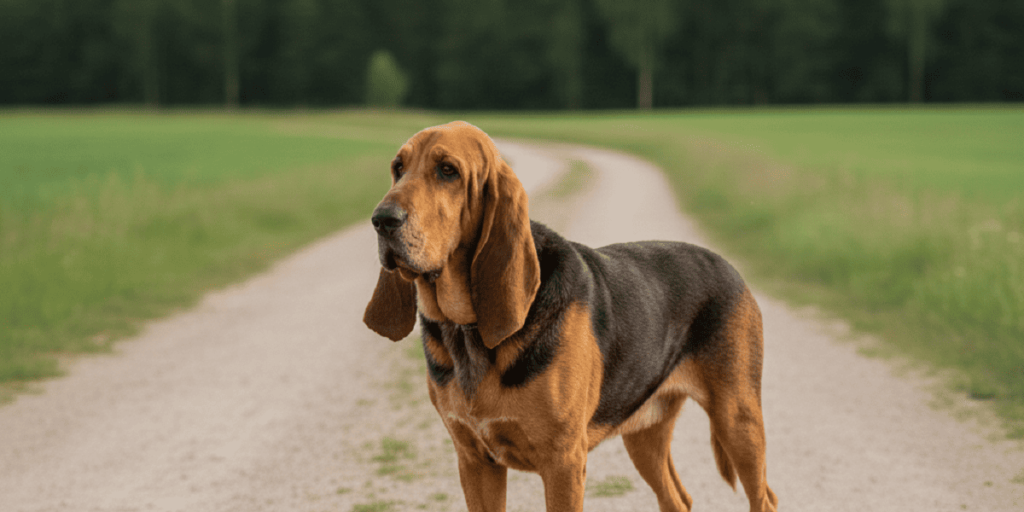
The Bloodhound is a large, powerful, and impressive dog. It typically stands between 58 and 69 cm at the shoulder and weighs between 36 and 50 kg. Its build is strong and heavy-boned. Long drooping ears, loose and wrinkled skin, and a soulful expression are highly distinctive features. The coat is short, dense, and easy to maintain. Common colors include black and tan, liver and tan, or red.
What is the Bloodhound’s temperament?
The Bloodhound has a gentle, calm, and affectionate temperament with its family. Very patient, it is generally tolerant with children. Naturally sociable, it usually gets along well with other dogs. When following a scent trail, however, it can become extremely focused and independent. Intelligent but sometimes stubborn, it tends to follow its nose rather than respond immediately to commands, which requires patience and understanding from its owner.
Is the Bloodhound suited to your lifestyle?
The Bloodhound is best suited to people with space and time. It is more comfortable in a house with a yard than in an apartment. This dog needs regular outings to exercise and use its scenting abilities. It does not tolerate boredom or long periods of solitude well. Its size and strength require attentive handling. This breed is intended for owners who are available, patient, and able to meet its specific needs.
How should you train a Bloodhound?
Training a Bloodhound requires patience, consistency, and a gentle approach. Highly intelligent, it learns well, but its tracking instinct can make it easily distracted. Positive, reward-based methods are the most effective. Training sessions should be short and varied to hold its attention. Early socialization is essential to encourage balanced behavior. Clear rules are important while still respecting its independent nature.
What diet is best for a Bloodhound?
The Bloodhound needs a balanced diet adapted to its large size. High-quality kibble formulated for large breeds is recommended. Portions should be carefully controlled to prevent excess weight, which can worsen joint issues. A puppy’s diet should support gradual growth. In adulthood, a consistent diet helps maintain physical condition, endurance, and overall health.
What health issues affect the Bloodhound?
The Bloodhound may be prone to certain health problems, including joint disorders, skin infections, and issues related to its long, drooping ears. Skin folds require special attention to prevent irritation. Regular veterinary checkups are essential to prevent these conditions. Weight management, good hygiene, and moderate exercise help preserve long-term health and well-being.
How do you care for a Bloodhound on a daily basis?
Daily care of a Bloodhound requires regular attention, especially to its skin and ears. Weekly brushing is sufficient for its short coat, but skin folds should be cleaned frequently. The long ears need regular inspection and cleaning to prevent infections. Baths should remain occasional. Teeth and nails should also be monitored to maintain good overall hygiene.
What activities are ideal for a Bloodhound?
The Bloodhound enjoys activities that make use of its exceptional sense of smell. Long walks and scent-tracking exercises are particularly well suited to its natural abilities. It enjoys exploring its surroundings and following trails. While not a highly athletic dog, it still needs regular exercise. Mental stimulation through scent work is essential to prevent boredom and maintain balanced behavior.
Who is the Bloodhound best suited for?
The Bloodhound is ideal for patient, available owners who are passionate about scent work and tracking dogs. It suits families with space and a calm lifestyle. This breed is well suited to those who appreciate a gentle, independent, and persistent dog. It is less suitable for people seeking a highly obedient, fast-paced dog or one that is easy to manage in a confined urban environment.
Frequently asked questions
Yes, Bloodhounds are known for having a strong natural odor due to their skin folds and oily coat. Regular bathing and ear cleaning help manage the smell.
Bloodhounds are intelligent but very independent and scent-driven. Training requires patience, consistency, and strong motivation, especially with food rewards.
Yes, Bloodhounds are gentle, affectionate, and generally good with children. However, their size and stubborn nature require supervision and proper training.
- Sources:
- wikipedia.org
- akc.org