Table of contents
- Characteristics of the Breed
- Origins and breed history
- What does the Bernese Mountain Dog look like?
- What is the Bernese Mountain Dog’s temperament?
- Is the Bernese Mountain Dog suited to your lifestyle?
- How should you train a Bernese Mountain Dog?
- What diet is best for a Bernese Mountain Dog?
- What health issues affect the Bernese Mountain Dog?
- How do you care for a Bernese Mountain Dog on a daily basis?
- What activities are ideal for a Bernese Mountain Dog?
- Who is the Bernese Mountain Dog best suited for?
- Frequently asked questions
Characteristics of the Breed
| Bernese Mountain Dog: Characteristics | ||
|---|---|---|
| Origin | Switzerland | |
| Size | Large | |
| Coat type | Long | |
| Average lifespan | 7–10 years | |
| Hypoallergenic | No | |
| Bernese Mountain Dog: Measurements | ||
| Female | Male | |
| Weight | 36–45 kg | 40–50 kg |
| Height | 58–66 cm | 64–70 cm |
Origins and breed history
The Bernese Mountain Dog originates from Switzerland, where it was used as a versatile farm dog. It helped guard properties, drive cattle, and pull light loads. Developed in alpine regions, it was selected for its strength and reliable temperament. The breed was officially recognized in the early 20th century and later spread across Europe and North America, where it became a highly popular companion dog.
What does the Bernese Mountain Dog look like?
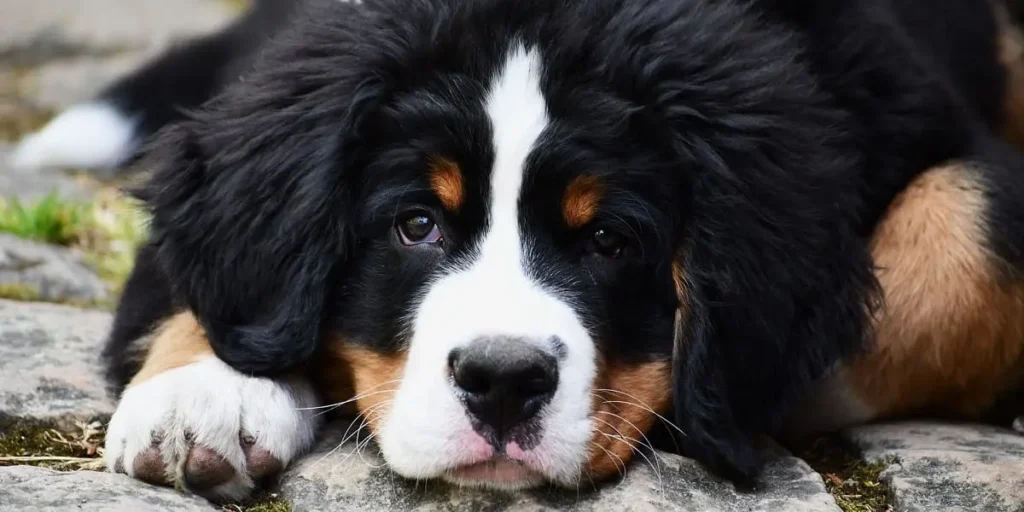
The Bernese Mountain Dog is a large, powerful, and well-proportioned dog. It typically stands between 58 and 70 cm at the shoulder and weighs between 35 and 50 kg. Its build is robust, with strong bone structure and well-developed muscles. The coat is long, thick, and slightly wavy, black with distinctive tan and white markings. Average life expectancy ranges from 7 to 10 years.
What is the Bernese Mountain Dog’s temperament?
The Bernese Mountain Dog has a gentle, calm, and affectionate temperament. Very attached to its family, it is patient and kind, especially with children. Sociable by nature, it usually gets along well with other animals. Intelligent and willing, it enjoys interaction and aims to please. Its balanced character makes it a reliable dog, sometimes reserved with strangers but never aggressive when properly socialized.
Is the Bernese Mountain Dog suited to your lifestyle?
The Bernese Mountain Dog is best suited to households with space and time to devote to it. It is more comfortable in a house with a yard than in an apartment. This dog enjoys a calm lifestyle and tolerates prolonged solitude only moderately. It is not overly energetic but does require regular outings. This breed is ideal for families seeking a peaceful, people-oriented companion.
How should you train a Bernese Mountain Dog?
Training a Bernese Mountain Dog should be gentle, consistent, and positive. Sensitive and intelligent, it responds very well to encouragement and rewards. Harsh methods should be avoided, as they may cause fearfulness. Early socialization is recommended to build confidence. Training sessions should be regular but adapted to its pace, as it prefers calm learning rather than pressure.
What diet is best for a Bernese Mountain Dog?
The Bernese Mountain Dog needs a high-quality, balanced diet suited to its large size. Premium kibble for large-breed dogs is generally recommended. Portions should be controlled to limit weight gain, which can stress the joints. A puppy’s diet should support gradual growth, while an adult’s diet should protect joint health and overall physical condition.
What health issues affect the Bernese Mountain Dog?
The Bernese Mountain Dog may be prone to several health issues, particularly joint disorders and certain hereditary diseases. Its size and rapid growth require careful monitoring from an early age. Regular veterinary checkups are essential for early detection. Maintaining a healthy weight, providing quality nutrition, and ensuring moderate activity all help preserve long-term health and well-being.
How do you care for a Bernese Mountain Dog on a daily basis?
Daily care for a Bernese Mountain Dog requires regular attention, mainly due to its long coat. Brushing several times a week is necessary to prevent matting and reduce shedding. During shedding periods, brushing should be more frequent. Baths should remain occasional. It is also important to monitor ears, teeth, and nails to maintain good overall hygiene.
What activities are ideal for a Bernese Mountain Dog?
The Bernese Mountain Dog enjoys moderate activities suited to its size. Regular walks, calm hikes, and family playtime are ideal. It is not built for intense sports but appreciates shared, low-impact activities. Mental stimulation is also important to maintain balance. Activities strengthen the bond with its owner and contribute to overall well-being.
Who is the Bernese Mountain Dog best suited for?
The Bernese Mountain Dog is ideal for families or individuals looking for an affectionate, calm, and reliable dog. It suits households with space and a relatively quiet lifestyle. This breed is perfect for those who value closeness with their dog and are willing to invest time in grooming and care. It is less suitable for very active people or owners who are frequently absent.
Frequently asked questions
Yes, the Bernese Mountain Dog is known for being gentle, affectionate, and very patient, making it an excellent companion for families. It is particularly kind with children.
Bernese Mountain Dogs have a relatively short life expectancy due to a higher risk of genetic health problems, including certain cancers. Responsible breeding and regular veterinary care can help improve their longevity.
Yes, Bernese Mountain Dogs shed a lot throughout the year, with more significant shedding during seasonal changes. Regular brushing is essential to maintain their thick double coat.
- Sources:
- wikipedia.org
- akc.org