Table of contents
- Characteristics of the Breed
- Origins and breed history
- What does the Basenji look like?
- What is the Basenji’s temperament?
- Is the Basenji suited to your lifestyle?
- How should you train a Basenji?
- What diet is best for a Basenji?
- What health issues affect the Basenji?
- How do you care for a Basenji on a daily basis?
- What activities are ideal for a Basenji?
- Who is the Basenji best suited for?
- Frequently asked questions
Characteristics of the Breed
| Basenji: Characteristics | ||
|---|---|---|
| Origin | Congo | |
| Size | Medium | |
| Coat type | Short | |
| Average lifespan | 13–14 years | |
| Hypoallergenic | No | |
| Basenji: Measurements | ||
| Female | Male | |
| Weight | 9–11 kg | 10–12 kg |
| Height | 40–43 cm | 40–43 cm |
Origins and breed history
The Basenji is a very ancient breed originating from Central Africa, particularly regions corresponding to today’s Democratic Republic of the Congo. Used as a hunting dog by local populations, it helped locate and drive game. Its unique vocal trait, as it does not bark in a typical way, has always set it apart. Introduced to Europe and the United States in the 20th century, the Basenji was later officially recognized by major kennel organizations.
What does the Basenji look like?
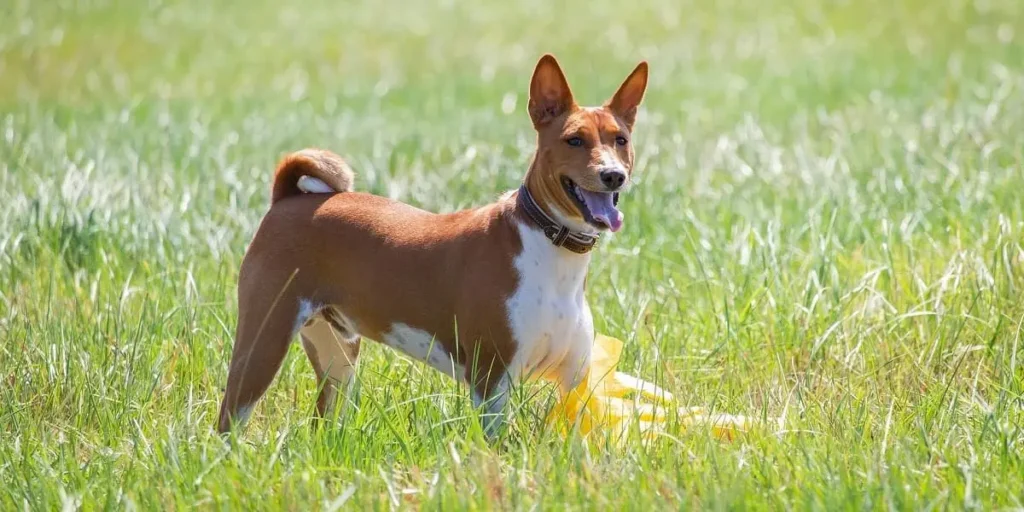
The Basenji is a small to medium-sized dog, elegant and well proportioned. It typically stands between 40 and 43 cm at the shoulder and weighs around 9 to 11 kg. Its build is lean and athletic, with a tightly curled tail carried high. The coat is short, fine, and glossy, making it easy to maintain. Common coat colors include red and white, black and white, or brindle. Average life expectancy ranges from 12 to 16 years.
What is the Basenji’s temperament?
The Basenji has an independent, curious, and intelligent temperament. Often compared to a cat in its behavior, it is clean, discreet, and quiet. Very attached to its family, it remains reserved with strangers. It can be stubborn and does not always respond immediately to commands. This dog enjoys freedom and exploration while forming a strong bond with its close circle once trust is established.
Is the Basenji suited to your lifestyle?
The Basenji is best suited to patient and available people who can respect its independence. It can live in an apartment if it benefits from regular and stimulating outings. This dog tolerates solitude only moderately and may become bored if under-stimulated. Its hunting instinct is strong, requiring extra vigilance during walks. This breed is better suited to owners willing to adapt to its unique personality.
How should you train a Basenji?
Training a Basenji requires patience, consistency, and creativity. Intelligent but highly independent, it may be unreceptive to repetitive commands. Positive methods based on motivation and rewards are essential. Training sessions should be short and varied to maintain interest. Early socialization is crucial to encourage balanced behavior with people and other animals.
What diet is best for a Basenji?
The Basenji needs a balanced diet adapted to its size and activity level. Quality kibble for small to medium-sized dogs is generally recommended. Portions should be controlled to maintain a stable weight. A puppy’s diet should support harmonious growth, while an adult’s diet should preserve energy levels. Particular attention should be paid to the digestibility of food.
What health issues affect the Basenji?
The Basenji is generally robust, but it may be prone to certain hereditary conditions such as Fanconi syndrome or eye disorders. Early screening and regular veterinary follow-up are essential to prevent these issues. Maintaining an appropriate diet and a healthy weight helps preserve overall health. Careful selection of breeding dogs has reduced the frequency of some health problems.
How do you care for a Basenji on a daily basis?
Daily care for a Basenji is simple thanks to its short, fine coat. Occasional brushing is sufficient to remove dead hair and keep the coat clean. This dog is naturally very clean and often grooms itself. Baths are rarely necessary. However, it is important to regularly check the ears, teeth, and nails to maintain good overall hygiene.
What activities are ideal for a Basenji?
The Basenji enjoys activities that stimulate its instincts and intelligence. Energetic walks, scent games, and light agility exercises are well suited. It enjoys exploring its environment and needs controlled freedom. Mental stimulation is essential to prevent boredom. Varied activities help channel its energy and maintain good behavioral balance.
Who is the Basenji best suited for?
The Basenji is ideal for experienced owners or people willing to understand a dog with an atypical temperament. It suits those looking for a discreet, clean, and independent companion. This breed is best suited to calm, structured households that can provide time and stimulation. It is less suitable for people seeking a highly obedient or extremely demonstrative dog.
Frequently asked questions
The Basenji can be a good family dog for experienced owners, especially those with older children. Independent by nature, it prefers to be treated with respect and given clear boundaries.
No, Basenjis are known as barkless dogs and do not bark like most breeds. Instead, they make unique sounds, such as yodeling or howling.
Basenjis are intelligent but very independent and can be difficult to train. Patience, consistency, and positive reinforcement are essential.
- Sources:
- wikipedia.org
- akc.org